A workplace is more than desks, deadlines, and meetings. It shapes how employees think, perform, and feel every day. When people spend a large part of their lives at work, the environment around them matters more than many organizations realize.
A work-friendly environment is not about fancy office interiors or free coffee. It is about creating a space where employees feel respected, supported, motivated, and comfortable enough to do their best work.
Today, employees are not only looking for salaries. They want balance, flexibility, appreciation, and a healthy culture. Companies that understand this build stronger teams, better productivity, and long-term loyalty.
What Makes a Workplace Employee-Friendly?
A positive workplace usually has a few common qualities:
- Open and respectful communication
- Supportive leadership
- Healthy work-life balance
- Recognition and appreciation
- Equal opportunities for growth
- Collaboration instead of unhealthy competition
- Mental and emotional well-being support
When employees feel safe and valued, they naturally become more engaged and productive.
Signs Your Workplace Environment Needs Improvement
Sometimes organizations unknowingly create stressful environments. A few warning signs include:
- Employees constantly feeling exhausted
- High turnover rates
- Poor communication between teams
- Lack of motivation or enthusiasm
- Frequent conflicts at work
- Employees afraid to share ideas or feedback
Ignoring these issues can slowly affect morale, performance, and company reputation.
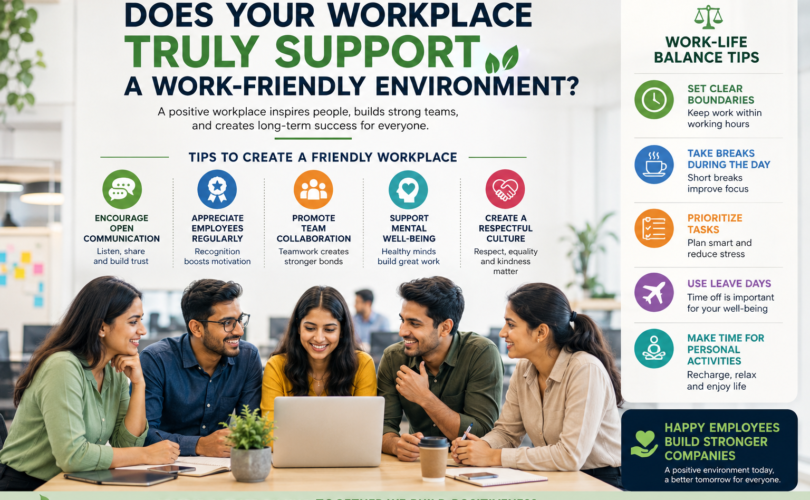
Tips to Create a Friendly Workplace Environment
1. Encourage Open Communication
Employees should feel comfortable sharing opinions, ideas, and concerns without fear of judgment.
Simple practices help:
- Regular team discussions
- One-on-one check-ins
- Transparent updates from management
- Active listening from leaders
Good communication builds trust.
2. Appreciate Employees Regularly
Recognition does not always need to be financial.
A simple:
- “Great job”
- “Thank you for your effort”
- Public appreciation during meetings
can boost confidence and motivation.
People perform better when they feel noticed.
3. Promote Team Collaboration
Healthy teamwork creates stronger relationships and reduces workplace stress.
Encourage:
- Group projects
- Knowledge sharing
- Team-building activities
- Cross-department collaboration
A connected team creates a healthier atmosphere.
4. Support Mental Well-Being
Work pressure is real. Companies should normalize conversations around stress and mental health.
Helpful initiatives include:
- Flexible schedules
- Mental health days
- Wellness sessions
- Reasonable workloads
- Break-friendly culture
Employees who feel mentally supported are more focused and creative.
5. Create a Respectful Culture
Respect should exist at every level of the organization.
That means:
- No toxic behavior
- No discrimination
- Fair treatment for all employees
- Respect for personal boundaries and time
A respectful environment creates emotional safety.
Work-Life Balance Matters More Than Ever
One of the biggest reasons employees feel unhappy is poor work-life balance.
When work constantly enters personal life, stress increases and productivity eventually drops.
A healthy balance helps employees:
- Recharge mentally
- Spend quality time with family
- Improve focus at work
- Reduce burnout
- Maintain physical health
Companies that support balance often see better retention and employee satisfaction.
Simple Work-Life Balance Tips for Employees
Set Clear Boundaries
Avoid checking emails or work messages outside working hours whenever possible.
Take Breaks During the Day
Short breaks improve focus and energy.
Prioritize Tasks
Not every task is urgent. Proper planning reduces stress.
Use Leave Days
Taking time off is necessary, not selfish.
Make Time for Personal Activities
Exercise, hobbies, family time, and rest are essential for mental well-being.
What Employers Can Do to Improve Work-Life Balance
Organizations can help by:
- Offering flexible working hours
- Avoiding unnecessary overtime
- Respecting personal time
- Encouraging vacations and breaks
- Measuring productivity by results, not long hours
Employees should not feel guilty for having a life outside work.
Positive Workplaces Build Stronger Businesses
A positive environment benefits everyone.
Employees feel:
- Happier
- More motivated
- More loyal
- More creative
Organizations benefit through:
- Better productivity
- Lower turnover
- Stronger teamwork
- Improved company reputation
A healthy workplace culture is no longer optional. It is one of the biggest factors behind long-term business success.
Final Thoughts
Creating a work-friendly environment is not a one-time effort. It is a continuous process built on respect, communication, support, and balance.
When employees feel valued and emotionally safe, they contribute with more energy, creativity, and commitment.
The best workplaces are not just places where people work. They are places where people grow, feel supported, and enjoy being part of the team.
For organizations looking to build stronger teams and happier employees, investing in a positive workplace culture is one of the smartest decisions they can make.